Sustainable Development Solutions Network (SDSN) Approves CLSU as a Member of the Institution
March 24, 2026
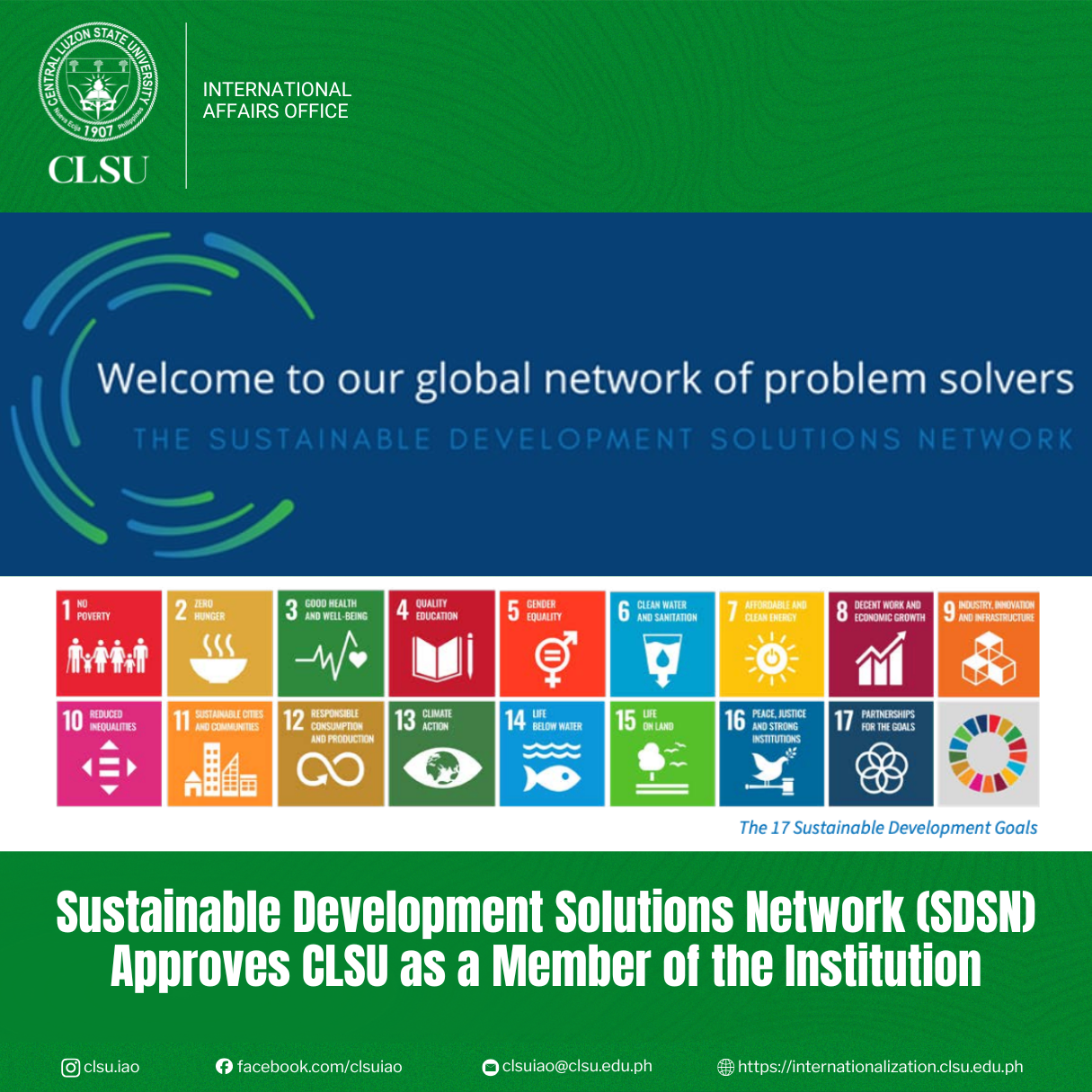
Central Luzon State University (CLSU) proudly joins the Sustainable Development Solutions Network (SDSN) as an institutional member, marking a significant step in strengthening its commitment to advancing the Sustainable Development Goals (SDGs).
As part of the global SDSN network—an initiative that mobilizes universities, research centers, and knowledge institutions to promote practical solutions for sustainable development—CLSU is poised to contribute to interdisciplinary research, policy engagement, and capacity-building initiatives that address pressing local and global challenges.
This membership enables CLSU to collaborate with international experts and institutions, access cutting-edge knowledge platforms, and integrate SDG-oriented frameworks into its academic, research, and extension programs. Through this engagement, CLSU reinforces its role as a key driver of sustainable development in the Philippines and the ASEAN region, fostering innovation, inclusive growth, and evidence-based solutions aligned with global sustainability agendas.
The institution is honored to be a member of the Sustainable Development Solutions Network (SDSN), joining other top-tier universities in the Philippines such as the Ateneo de Manila University, De La Salle University, University of the Philippines Diliman, University of the Philippines Los Banos, Visayas State University, Far Eastern University, Batangas State University, Mapua University, University of Santo Tomas, Xavier University-Ateneo de Cagayan, Tarlac Agricultural University, Tarlac State University, and Nueva Ecija University of Science and Technology.
The SDSN works closely with key international leadership, governments, the UN, and multilateral institutions — including the International Monetary Fund, the Organization for Economic Cooperation and Development (OECD), the United Nations Educational, Scientific and Cultural Organization (UNESCO), the Food and Agriculture Organization (FAO), G-20 and T-20 leadership, among others — in their efforts to coordinate crosssectoral, regional, and national action on the SDGs.