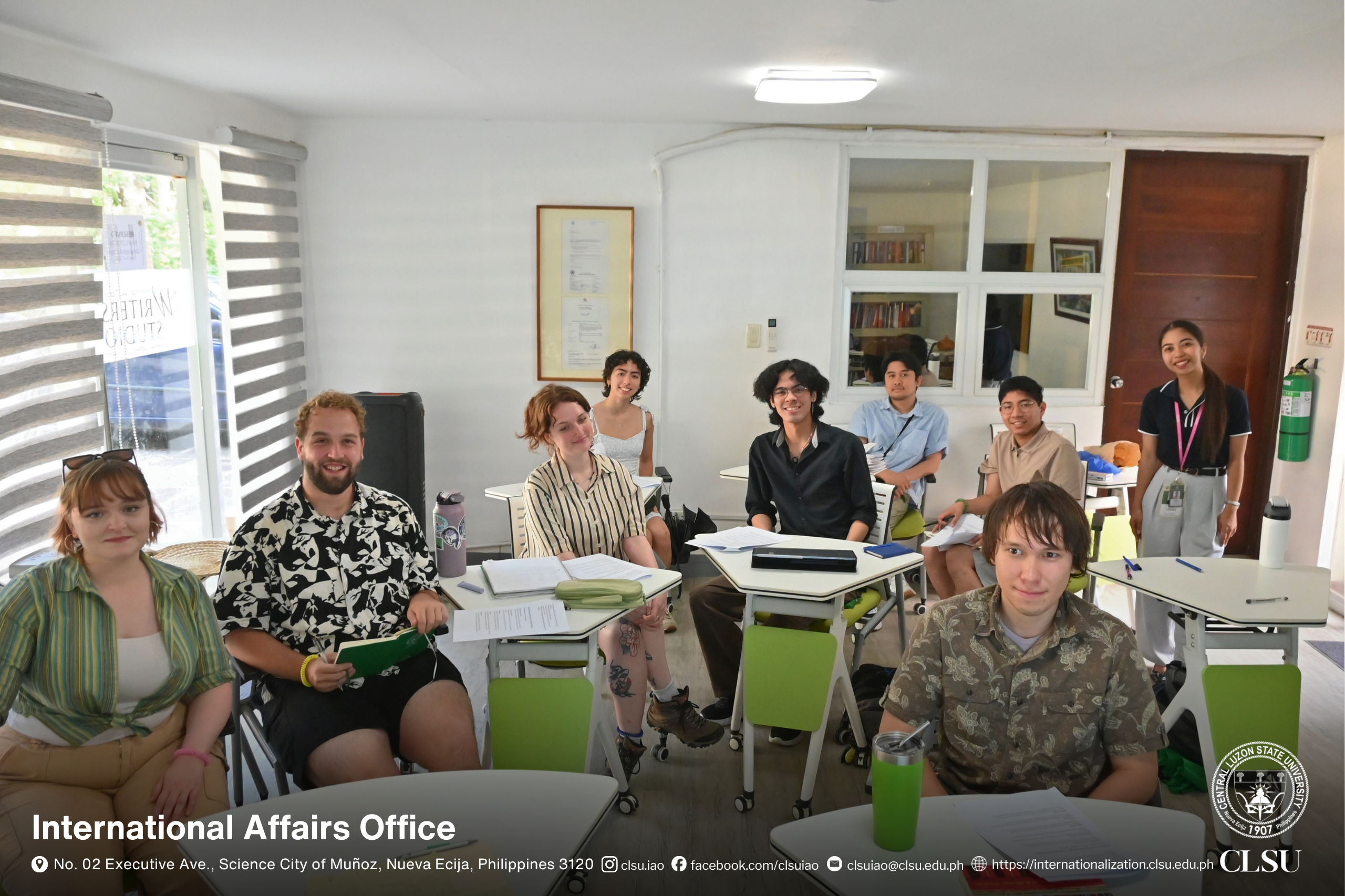
Central Luzon State University (CLSU), through the International Affairs Office (IAO) and College of Arts and Social Sciences (CASS), successfully concluded the sixth International Filipino Language and Culture Program (IFLCP) and the Green and Global Philippines: Language, Culture, and Sustainability Program 2026. The six-week short-term immersion programs hosted eight international students from Harvard University, Northern Illinois University, and the University of California, Berkeley, USA.
This year’s participants took part in a series of classes, hands-on activities, field exposures, and cultural immersion experiences designed to deepen their understanding of Filipino language and culture, sustainable practices, and community life.
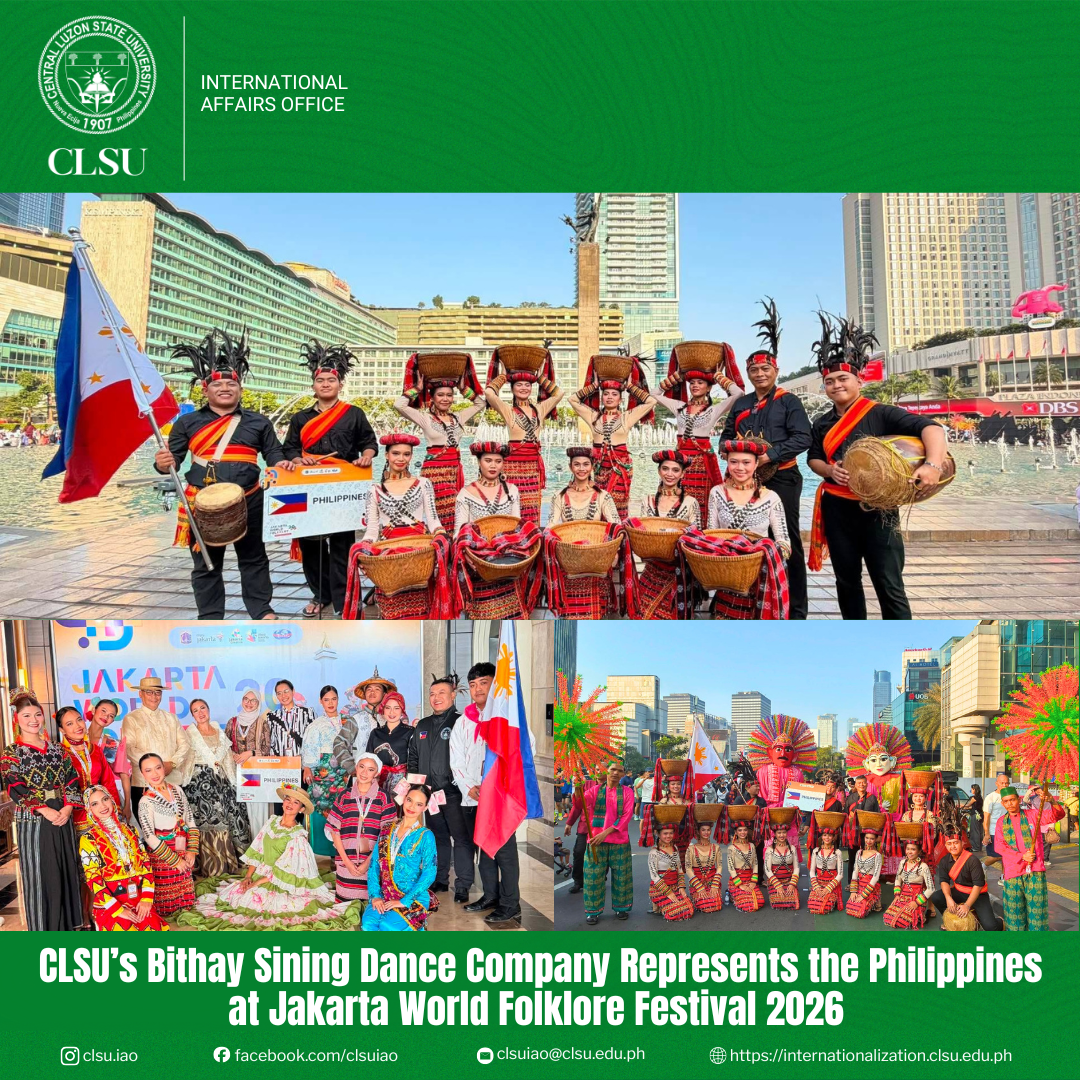
Through the collective efforts of various CLSU units and organizations, the participants experienced an interdisciplinary program that combined language learning, performing arts, traditional sports, agriculture, and cultural preservation. Faculty members from the College of Arts and Social Sciences served as Filipino language instructors, while the Bithay Sining Dance Company introduced the participants to Philippine folk dances. Tanghalang Gagalaw sa CLSU immersed them in Philippine dramatic and theatrical arts.
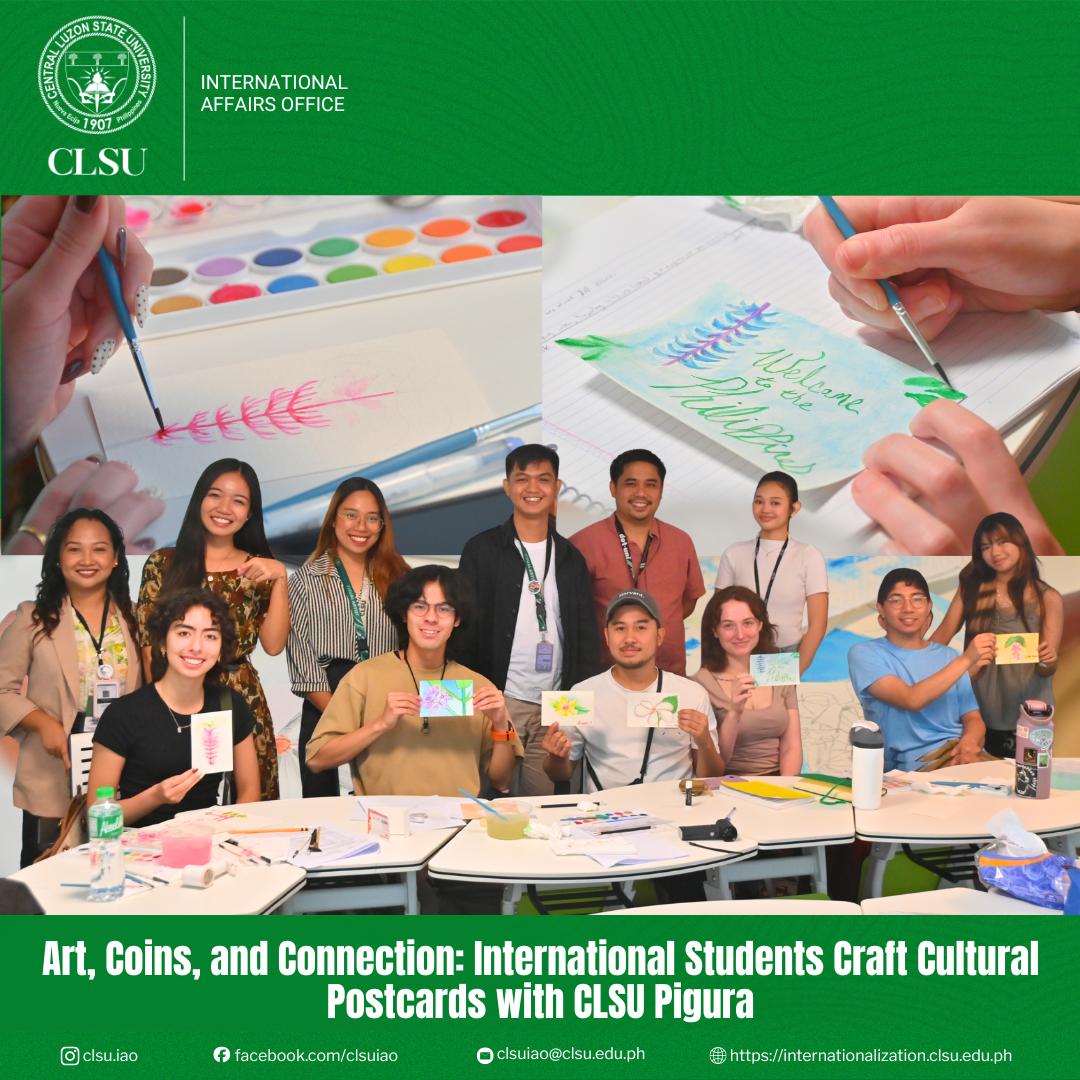
The CLSU Crops and Resources Research and Development Center also provided the participants with firsthand experience in traditional rice planting. Dr. Emil F. Ubaldo, Chief of the Mobility and Intercultural Exchange Division, facilitated a postcard-making activity inspired by the designs of the Philippine New Generation Currency Coin Series in collaboration with the CLSU Pigura. Meanwhile, the IAO Student Volunteers led interactive cultural activities, including demonstrations and basic training in arnis.
These cross-disciplinary experiences combined intensive Filipino language and cultural immersion with field-level exposure to CLSU’s sustainable agricultural development and cultural preservation initiatives.
To understand Filipino culture more deeply, the participants also explored its foodways. They visited the public market in the Science City of Muñoz, where they sourced fresh local ingredients, interacted with vendors, and practiced their Filipino conversational skills. Upon returning to the University, they participated in a hands-on cooking session and learned to prepare popular Filipino dishes such as adobong manok, ginisang gulay, and turon.
One of the cultural highlights of the program was the participants’ visit to the annual Taong Putik Festival in Bibiclat, Aliaga, Nueva Ecija. They witnessed devotees covered in mud and dried banana leaves as part of a religious tradition honoring Saint John the Baptist. The participants also visited the homes of CLSU professors, where they experienced the warmth, hospitality, food, and communal traditions of a Filipino fiesta.
Over the course of six weeks, these diverse experiences transformed theoretical knowledge into meaningful and lasting memories. By bringing together language learning, performing arts, traditional sports, agricultural practices, Filipino cuisine, and local festival traditions, the International Filipino Language and Culture Program and Green and Global Philippines 2026 successfully connected global perspectives with local roots, leaving the participants with a deeper appreciation of and connection to the heart of the Philippines.
#SDG4QualityEducation
#SDG17PartnershipfortheGoals